Saturday, 5 November 2016

Judge Ye Not


If you had not noticed there has been a fuss in the media about three old lawyers locked in the judiciary who state that the government cannot do what it wanted to, or rather what the electorate told it was wanted about the UK disengaging from the EU.

Given that the House of Commons has very many lawyers in its ranks, as does the Government and the House of Lords this had made the issue of even greater importance. There are large fees in the offing. Among other things, preferment being one of them.

It was said that during the time when Anthony Blair, Prime Minister and a lawyer and married to a practising lawyer, Cherie, who became a judge (Gilbert and Sullivan chorus from "Trial By Jury" "And a good judge too..." which we once saw performed at the Courts of Justice), Downing Street took a close interest in who was elevated to the bench and who was not.

It was around fifteen years ago when enjoying a musical evening at the Temple Church; I was rather hoping that that this would bring up the spirit of Oliver Goldsmith to clear up some history questions about Arnold Nesbitt, when I overheard a conversation. It was about a recent appointment to the bench where the person referred to was called "One of Cherie's little darlings". I think it was sarcasm but you never know with lawyers.

A long time ago, a playwright and actor lodged in the area who would have encountered many lawyers in his trade. He made his feelings clear about the profession. See William Shakespeare, "King Henry VI, Part 2", Act Four, Scene Two, Line 73. Dick the Butcher speaks to Jack Cade.

"First thing we do, let's kill all the lawyers." I wonder how many effigies of judges we might see on the bonfires tonight?

Wednesday, 2 November 2016

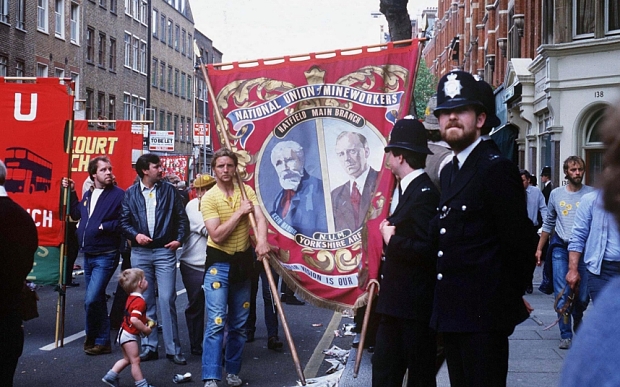
Unofficial Report On Events At Orgreave 1984


This report is necessary because a number of politicians and others could not be bothered to research it themselves, were not able to use the internet and were not sure of who to ask among the very many people who were around at the time. As usual they want an expensive inquiry composed of people who know little or nothing about it.

In June 1984 three months after the start of the Miner's Strike, of which little warning was given apart from Mr. Scargill and friends with megaphones and speeches at hundreds of meetings as well as extensive press and media coverage, it was not going well. The miner's leaders, while disagreeing about most things managed to conclude that summat must be done.

As over a decade before another Miner's Strike in the early 70's was recalled it seemed a good idea to do more or less the same sort of thing that was tried then and which had success. This was to prevent supplies of coal from the vast numbers of tips and from mines where the miners did not want to strike from getting to power stations and related plants.

All you had to do was go to them with gangs of hard men, beat up who was doing it and ensure their families were threatened and assaulted and if necessary burned out of their homes. This would stop the supply of energy and defeat the government. Not just that but the government elected only a few months before with a large majority would be overthrown and replaced. A new government of trade union leaders assisted by Moscow would join the Eastern Block and live happily ever after with East Germany as its guiding hand.

The Prime Minister was Mrs. Margaret Thatcher, a war monger who  in 1982 had attacked an innocent socialist Dictator of Argentina who only wanted to bring Spanish cuisine to the Falklands Islands, then being fed on British fish and chips. She had gathered round her a number of militarists bent not only on disagreeing with socialist dictators who needed to give their troops experience but unfairly who had actually some experience of fighting in war.

These were Denis, her husband, William Whitelaw who had been given an Military Cross showing that he was an arch aggressor as had Peter Carrington. Others were Keith Joseph and Nicholas Ridley.  Much worse was that they had the audacity to think and plan ahead displaying an anti-democratic intent to keep energy supplies going for the economy and ordinary homes.

The Nation Union of Mineworkers innocent of the need to think, plan, and organise logistics were at the mercy of a group in power who used these vile things to the full. We have not found the secret agents deployed to Barnsley to spy but with only around a hundred thousand people locally who were aware of the NUM's intentions it was a well kept secret that required the high skills of reading newspapers and listening to the news on radio or other people.

It would have taken long and careful training to ensure spies knew how to wear a flat cap, knot an old and dirty scarf and be able to stand up and drink beer in straight pint classes in secret venues called public houses with public bars or working men's clubs. They had to know how to treat a whippet and discuss the local sport of soccer as well as being able to use a 'bus.

The local police, South Yorkshire, were under a police committee chaired by a Barnsley Labour teacher together with members who were miners. He was also a governor of Barnsley Tech', its biggest department being Mining, across the street from the Yorkshire NUM head office, Scargill Palace as it came to be known. Also, within yards, was Barnsley Town Hall where the gregarious councillors, governors and NUM senior officials used to gather to discuss the quality of the municipal whisky.

For how it all started refer to "Mining The Past" from October 2014 in this blog. Historically, the thesis that the cock-up theory of history applies may be difficult to accept given all the potential for various wider ones of political philosophy but given the history of the strike, for those around there at the time philosophy came a poor second to sheer daftness.

Given that the South Yorkshire Police had a lot of officers who were of mining families, a great many living in local areas where they were vulnerable and had as its governors a Committee largely composed of people representing mining communities, it was likely that the NUM would get its way in closing down many power stations and other plant.

As in other emergencies the government used its powers to bring in police that would defend the plants. Of course in retrospect this could be seen as wrong, other trade union leaders at the time were adamant that it was.

The consequence was that police trained and able to deal with riots and violence came in. It was difficult, when Scargill's men were trampling about and desecrating the graves in Handsworth Cemetery adjacent to Orgreave, some being of miners who died in accidents, many thought that this was quite acceptable and it was wrong for the police to chase them away.

The trouble was that Scargill was going by the Lenin play book but the mounted police were not. Those of us familiar with cavalry and its history and for that matter other riots in other places would argue that the relatively limited number of flying pickets hit, mostly only poor mature or other students was small. Given that there was ample scope for retreat that they insisted on standing in the way of a galloping horse was not entirely sensible.

Today's critics will feel strongly that the pickets and NUM recruited demonstrators should have been allowed to cripple and injure those they pleased, whether they were ordinary workers wanting to work or miners who did not want to strike. Then there the others, miners who eyed the redundancy terms and wanted to be eligible.

For which side you are on take your pick.

There you are, will this do? And it's for free.

Monday, 31 October 2016

Kissing Cousins?


There was a time when Ken Loach, the film maker and icon of the Left; Margaret Thatcher, born Roberts, who went into politics and myself, were doing the same thing at the same time for the same reasons. Were our reactions similar and our opinions of what should be done and was right to be done?

The period was 1940 and later, we were responding to the warning sirens, going to the air raid shelters and avoiding the bombers going over eastern England and heading for Coventry and the West Midlands. The Coventry Blitz is well known,  The Nuneaton Blitz where Ken was only a short distance away is described in this journal.

Another common item was Rugby Union Football, or rugger. Margaret did not play, I suspect that in the modern world she would have made an attacking fly half. Her husband, Denis, became a first class referee. Both Ken and I were at rugger playing grammar schools, thanks to R.A. Butler's 1944 Education Act. His, King Edward VI, was a good team with a decent fixture list.

Rugger in the Midlands was not the preserve of the public schools etc. as in some parts, many of the ordinary working population both watched and played. The Nuneaton town team then was very good having and beating some of England's top teams on its fixture list. Similarly, the Nuneaton Old Edwardians were a strong local team and are still around.

Was this a positive CV item for Ken for his entry to St. Peter Hall in Oxford, not then a College?  I recall when playing against Hall teams at Oxford some public school men having a thing that women could have Colleges when some men didn't. More important was that at both Cambridge and Oxford female company was in very short supply for the students.

Margaret never served in the Armed Forces, although Grantham was the middle of many airfields and camps between 1942 and early 1945. She would have been well aware of the military. Ken did do National Service said to be in The Royal Air Force, The Brylcreem Boys, probably between 1955 and 1957. It was not an ideal time with the Suez Crisis of '56 as well as a great deal of other activity. On 31 October 1956 the RAF bombed Egypt.

Ken, after National Service in 1957 went up to Oxford and signed up with the OU Drama Society perhaps hoping for some romantic Rattigan or Coward. But did he feature in the 1960 Ionescu's "The Bald Prima Donna" in the then fashionable Theatre Of The Absurd? This together with the arty French films etc. around at the time left its mark on his later work.

Margaret when up at Somerville College nearby in the mid '40's went in for politics, another form of surreal drama. Pity really, she might have made a good Mistress Ford in "The Merry Wives Of Windsor". Then she went into research science one of the key team that gave us emulsifiers for ice cream, that great leap into the unknown.  After marriage she decided on law, studying part time for the hard to get qualification as a Barrister.

Ken did a Jurisprudence degree at Oxford. Ken's study of law would have made a world of difference to his career in film making and the media. When it came to the contracts and small print he would have had a grasp of the basics and the detail and could make sure he was right in the same way that Margaret could meet with lawyers and scientists on equal terms.

We know what happened next to the pair of them, but what had happened before in the further past? In this blog the item "Tribune of the Plebians" it was made clear that Margaret was one of the working classes in her family history her father rising to the dizzy heights of a shopkeeper who owned his own shop and Mayor of his town.

Going back to 1851 Ag. Lab's, agricultural labourers appear in her family tree. It is the same with Ken; and his Ag. Lab's are not far from Margaret's. Before then it is difficult to trace much more as is normal and neither has a "gateway" ancestor at that stage although you can never tell what might happen, where or how.

Often it is not what you want to see. Both are likely to have the Yeomen and Husbandmen and small farmers, so many of whom were wiped out by enclosures and who had families who went downward in terms of social mobility.

A possible Thomas Loach appears in the military during the Napoleonic Wars when Britain fought against the domination of Europe. He enlisted for the Coldstream Guards and saw service with Wellington in the Peninsula. Also, he was in London, and would be seen guarding King George III, The Prince of Wales, later Regent and The Bank of England against revolutionaries and republicans.

One hope was that the Ag. Lab of 1851, Charles Loach, gave his place of birth as Snitterfield in Warwickshire, the birth place of the John Shakespeare of the 16th Century, who moved down to Stratford upon Avon and whose son William we know. Sadly, that one did not work out. But on the side of Ken's mum, the Hamlin family had come from Bibury in the Cotswolds.

This is near to Sapperton and the Poole family of the 16th Century one of whom married an Aylesbury of Warwickshire and numbered Whittington's among their families. There were many and various of these. It was a Frances Aylesbury who became a grandmother to Queen Mary II whose husband was King William III. This is a very long shot, but you never know.

More to the point about the Cotswolds was that once it was one of the heartlands and major industrial bases of the Medieval Wool Trade and later. Sadly, under the Stuarts the combination of high taxation, central control of trade and unwise regulation brought it to ruin and the wool trade went elsewhere. The late Professor EM Carus-Wilson of LSE was an authority on this subject, her tract on Merchant Venturers is available on Amazon.

But back to 1851 for another matter. On the same page as Charles Loach is a James Chaplin and a William Hitchcox (Hitchcock?), to raise the eyebrows.

But whether the 57 year old unmarried Ag.Lab Thomas Roberts living next door to Charles is connected is interesting.

Saturday, 29 October 2016

He Nose You Know


The news that Ms. Samantha Cameron, spouse to David Cameron, a former Prime Minister now languishing among his financial advisers, is to confirm her status as a celebrity in her own right by lending her name to a brand of cosmetics, personal stuff and deodorants is perhaps not entirely a surprise.

What a pity she did not do this a few years ago.  What fun we might have had with the idea of "Stinker Cameron" at the head of government responsible for all those decisions on trade, industry and the environment. The imagination might run riot, but I am not up to it today.

No doubt some of it will be called "natural" which means a little Ho2, as distinct from HS2, and the odd dash or so of concentrates of the juices of some flowers or plants.

Most of the content and engineered to carry far and hit hard will be synthetics of standard kinds of the petro-chemicals available in bulk from a refinery near you.

In effect the reality is that the overall impact of these wonders of personal appearance will be much the same as sitting on a motorway stuck behind a line of trucks which have not been serviced for some time.

As to the content there is enough information out there to tell you what you what it is. It is of course a commercial enterprise to promote increased GDP, aka your money and very likely your rising debt liabilities.

There is a good deal of debate about the overall health and living aspect of all this stuff which has been marketed in recent decades. How typical of Cameron it is that in his mission to be with it and popular and impress people he has now moved on to poisoning the planet.

Are we paying him for this?

Friday, 28 October 2016

Going To The Bank


THE RUN UPON THE BANKERS
1720 Jonathan Swift

The bold encroachers on the deep
Gain by degrees huge tracts of land,
Till Neptune, with one general sweep,
 Turns all again to barren strand.

The multitude's capricious pranks
Are said to represent the seas,
Breaking the bankers and the banks,
 Resume their own whene'er they please.

Money, the life-blood of the nation,
 Corrupts and stagnates in the veins,
Unless a proper circulation
 Its motion and its heat maintains.

Because 'tis lordly not to pay,
 Quakers and aldermen in state,
Like peers, have levees every day
 Of duns attending at their gate.

We want our money on the nail;
 The banker's ruin'd if he pays:
They seem to act an ancient tale;
The birds are met to strip the jays.

"Riches," the wisest monarch sings,
 "Make pinions for themselves to fly;"
They fly like bats on parchment wings,
 And geese their silver plumes supply.

No money left for squandering heirs!
Bills turn the lenders into debtors:
The wish of Nero now is theirs,
 "That they had never known their letters."

Conceive the works of midnight hags,
 Tormenting fools behind their backs:
Thus bankers, o'er their bills and bags,
 Sit squeezing images of wax.

Conceive the whole enchantment broke;
 The witches left in open air,
With power no more than other folk,
 Exposed with all their magic ware.

So powerful are a banker's bills,
 Where creditors demand their due;
They break up counters, doors, and tills,
 And leave the empty chests in view.

Thus when an earthquake lets in light
 Upon the god of gold and hell,
Unable to endure the sight,
He hides within his darkest cell.

As when a conjurer takes a lease
 From Satan for a term of years,
The tenant's in a dismal case,
 Whene'er the bloody bond appears.

A baited banker thus desponds,
 From his own hand foresees his fall,
They have his soul, who have his bonds;
 'Tis like the writing on the wall.

How will the caitiff wretch be scared,
 When first he finds himself awake
At the last trumpet, unprepared,
 And all his grand account to make!

For in that universal call,
 Few bankers will to heaven be mounters;
They'll cry, "Ye shops, upon us fall!
 Conceal and cover us, ye counters!"

When other hands the scales shall hold,
 And they, in men's and angels' sight
Produced with all their bills and gold,
 "Weigh'd in the balance and found light!"

Wednesday, 26 October 2016

Picture This


The film maker Ken Loach, defying old age, has won the Palme D'Or and praise in many quarters for his latest film "I, Daniel Blake" set in what he regards as his home intellectual territory, the lives of those at the bottom of the heap and having a bad time.

There is interest in how much he would make on this in that film making is one of the those ruthless capitalist activities that are red in tooth and claw. That his film had other support has been an interest. So what will he do with the loot, sorry, the rewards of work and thought?

My suggestion is that he revisits one of his early successes, "Kes, A Kestrel for a Knave" to tell us what happened to Billy Casper the boy at the centre of the film.  Ever willing to be constructive, a plot line is suggested below.

Billy, now in his 60's is a retired former social worker who made it to the higher grades only to be early retired after an internal reorganisation following a management consultancy review. His hobby is stuffing birds for sale online but he has become the target and victim of eco' warriors.

After one divorce and then the failure of the second marriage, unwilling to pay for another divorce Billy has had several partners. His latest, Millie Glossop-Wooster is a former Guardian journalist who went to Barnsley to research poverty only to realise that if she sold her suburban home in Hampstead she could buy a decent large house and small holding up in the Pennine area of Barnsley.

Millie has created a bird breeding centre as a tourist attraction and  source of income. It is the old birds that Billy kills and stuffs to ply his trade. They live a quiet and ordinary life between Barnsley and their other homes in the Costa del Sol and Caithness. The plot deals with the stresses in their lives and partnership now they have become local hate figures.

A lot of noisy rows, debates, incidents and the rest involving much of the local community, the police and other services mean that Millie decides to go back to Hampstead and leave Billy. His only consolation is his season ticket in the main stand at Oakwell to watch Barnsley play.

Billy is lost and bereft. One day wandering in a part of old Barnsley he is drawn to enter a church where the door has been left open. Somewhere high up a choir is singing "You'll Never Walk Alone" as he goes to the altar and feels impelled to kneel and pray.

Then there is a tap on his shoulder. He looks up and sees Clarrie Hirst, his old Head Teacher who so often told him to get stuck in on the football pitch or else. But Clarrie has long since gone. "Come on lad," says the ghost of Clarrie, "Time for t' Big Kick Off, Barnsley are in the heavenly Premiership and you are the centre forward. The lads from Longcar will be there and Brannan has promised to put it down to expenses."

Billy follows Clarrie through the wall. The film closes with a cleaner, being paid below minimum wage, discovering the body of Billy, beside him is the feather from the tail of a kestrel.

Would crowd funding do the job?

Tuesday, 25 October 2016

Independence Day


"A consequence of the 1858 Government of India Act was that the United Kingdom ceased to be independent." Discuss. The history of the British Empire assumes that control was centred in London.  But that control depended on the interests involved, substantially those of the upper classes, the City of London and the imperatives of trade.

These imperatives often meant the UK paying the price or accepting commitments to others. Also, as India became so important to the UK for a variety of reasons, it might often be the case that the UK was obliged to follow the line of those in charge in India in making some decisions or determining lines of policy.

By the 1880's we were involved in Africa to a great extent but we could no longer go it alone. African matters involved other European powers, let alone the major financial interests in the City. The UK did not decide; the decisions were shaped for us by others.

By 1919 the First World War had left the UK a debtor state and had created a network of obligations, treaties etc. that bound our policies and actions, such as The League of Nations. Also, the Empire had changed and we had become tied in several ways to other commitments that impacted and what we did or did not do.

After the Second World War there was yet more debt, victory in theory but with a destruction in capital and money with continuing conflicts that left us impoverished and obliged to others for what we might eat or consume. There was the United Nations and progressively we became more and more tied to more organisations and continuing obligations.

It is arguable that before the First World War the counties of Down, Dumfries, Denbigh and Derby were more independent than was the United Kingdom by the 21st Century. When we hear the word "independence" from yapping politicians pandering to their paymasters they might mean detachment from EU officials or the Westminster offices and agencies for this and that but nothing else.

The media is full of big decisions that might soon be made, Hinckley Point, HS2 and Heathrow. But just who will be running the projects, who will be dealing with finance and who will be the real owners? As I walk about the town on the Chinese granite paving to visit my foreign bank, pass by the foreign owned railway service and pay money out to shops and services which are largely foreign owned I might wonder why.